|
|
|
|
|
|
SB 851/AB 865, RELATING TO; THE USE
OF LIVE ANIMALS IN MEDICAL TRAINING AND PROVIDING A PENALTY,
SESSION ENDED; DID NOT PASS.
Updated 3/27/26
|
|
|
|
| |
|
 Bill Text Bill History Bill
Summary Bill Text Bill History Bill
Summary
TAKE
ACTION Talking
Points
Find your WI State
Representatives What To Expect At A Public Hearing
|
| |
|
SESSION ENDED; DID NOT
PASS.
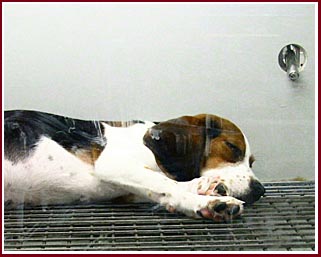 SB 851, Relating to: the use of live
animals in medical training and providing a penalty, was introduced on January
15, 2026 by Senator Cabral-Guevara and cosponsored by Representatives
Gustafson, Armstrong, Dittrich and Goeben. It was assigned to the
Senate Committee on Health. A Public Hearing was held on
1/29/26. You can read the Public Hearing testimony by clicking the link below.
SB 851 was passed out of Committee by a vote of Ayes 4, Noes 1 on 2/3/26 and
will likely go to the full Senate for a vote soon. SB 851, Relating to: the use of live
animals in medical training and providing a penalty, was introduced on January
15, 2026 by Senator Cabral-Guevara and cosponsored by Representatives
Gustafson, Armstrong, Dittrich and Goeben. It was assigned to the
Senate Committee on Health. A Public Hearing was held on
1/29/26. You can read the Public Hearing testimony by clicking the link below.
SB 851 was passed out of Committee by a vote of Ayes 4, Noes 1 on 2/3/26 and
will likely go to the full Senate for a vote soon.
Public Hearing Testimony &
Materials
Record of Committee Proceedings
On
January 16, 2026, a companion bill, AB 865, was introduced by Representatives
Gustafson, Goeben, Dittrich and Armstrong and cosponsored by Senator
Cabral-GuevaraIt. It was referred to the
Committee on Health, Aging and Long-Term Care.
On
3/4/2026, Representative Sinicki was added as a coauthor.
SB
851/AB 865, quite simply states that educational institutions are prohibited
from using live animals to train medical students, residents, fellows, interns,
or physicians in the medical treatment of human beings if 1) at least one other
accredited training program in the same medical discipline does not use live
animals or 2) there is an alternate teaching method or accredited course that
provides equivalent training without the use of live animals.
From the
Physicians Committee for Responsible Medicine:
"At the Medical College of
Wisconsin (MCW) in Milwaukee, general surgery residents cut into live pigs to
perform procedures and remove organs. If the animals survive the invasive
procedures, they are then killed. But that practice is not only cruel—it
is unnecessary. ...
"In January 2026,
legislators introduced Senate Bill 851 and Assembly Bill 865, which would
prohibit a medical center from using animals if other methods are
available—as they are in the case of MCW.
"High-fidelity surgical
simulators, virtual and augmented reality systems, and training with donated
human tissue allow residents to practice repeatedly and learn on realistic
human anatomy without causing animals to suffer.
"Across the U.S. and Canada,
80% of surveyed general surgery programs use only nonanimal training methods,
such as medical simulators and human cadavers. These are the tools used by
hundreds of surgery programs, including those affiliated with Harvard Medical
School, Stanford University, the Mayo Clinic, the Cleveland Clinic, and the
University of Wisconsin."
WE STRONGLY SUPPORT this bill. To quote
Rep. Nate Gustafson, one of the authors of the bill, "This legislation
promotes ethical standards, aligns Wisconsin with modem medical education
practices, and ensures high-quality training without unnecessary harm to
animals."
|
| |
Top
|
| |
Bill Summary (by the
Legislative Reference Bureau):
This
bill prohibits an educational institution from using live animals to train
medical students, residents, fellows, interns, or physicians in the medical
treatment of human beings if 1) at least one other accredited training program
in the same medical discipline does not use live animals or 2) there is an
alternate teaching method or accredited course that provides equivalent
training without the use of live animals, which alternate teaching method may
include human cadavers, high-fidelity synthetic simulators, virtual reality
models, or other alternatives modeled on human anatomy. A person who violates
this prohibition must forfeit $1,000 for each live animal used."
|
| |
Top
|
| |
WHAT YOU CAN DO:
General guidelines for
contacting your representatives: Try to keep your message brief, and be sure to
give your name, complete mailing address, and phone number. Let your
representative know that you are a constituent. Please, ALWAYS be polite and
respectful. Name-calling, and rude or abusive letters or emails will hurt,
rather than help, our cause.
PLEASE contact your WI State Legislators and ask them to
SUPPORT SB 851/AB 865, Relating to: the use of live animals in medical
training. Please put something like "YES to SB 851/AB
865" in the subject line. All you really need to say is, "I am a
constituent, and I am asking you please to vote YES on SB 851/AB 865, relating
to the use of live animals in medical training. This bill would prohibit
colleges and medical schools from subjecting live animals to tremendous pain
and stress in the name of education if other methods such as simulators,
virtual reality, and donated human tissues are available." You can add
your reasons for asking if you wish to do so. (Scroll down this page for more
info on the bill and Talking Points, if you need them, and, as always, please
keep your tone polite and respectful.)
Find your WI State
Representatives What To Expect At A Public Hearing
|
| |
Top
|
| |
Talking
Points:
At the Medical
College of Wisconsin (MCW) in Milwaukee, general surgery residents cut into
live pigs to perform procedures and remove organs. If the animals survive the
invasive procedures, they are then killed. But that practice is not only
cruel—it is unnecessary.
High-fidelity surgical simulators, virtual
and augmented reality systems, and training with donated human tissue allow
residents to practice repeatedly and learn on realistic human anatomy without
causing animals to suffer.
Across the U.S. and Canada, 80% of surveyed
general surgery programs use only nonanimal training methods, such as medical
simulators and human cadavers. These are the tools used by hundreds of surgery
programs, including those affiliated with Harvard Medical School, Stanford
University, the Mayo Clinic, the Cleveland Clinic, and the University of
Wisconsin.
For more talking
points, please read the
Public Hearing Testimony & Materials. Below are some
quotes taken from those documents:
The use of live dogs, kittens, rabbits,
pigs, and other animals has raised ethical issues and regret in many physicians
who, as students, were required to practice procedures on them. "...all
these creatures were referred to as lab animals to remove any responsibility
from us or compassion for them and to easier justify their use. Their enforced
anonymity and sacrifice still haunt me today.
"These animal labs were an unnecessary
component of my training, and my education would not have been hindered in
their absence. My training with human cadavers was exceedingly more valuable
and provided a much more robust and lasting learning experience." -- Mary
M. Milbraith, MD
"Harming and killing animals
unnecessarily chips away at what it means to be a caring healthcare provider.
The practice can leave deep emotional scars on those who take part. That moral
concern for the animals and for the doctors themselves is one reason hundreds
of medical schools have stopped the practice. But they also changed because its
better to train doctors on human anatomy." -- Marina Kropp, M.D.
"This bill strikes a balanced
approach: it safeguards animal welfare while allowing for exceptions in cases
where no viable alternative exists, such as specialized research or procedures
deemed essential by experts." -- Senator Rachael Cabral-Guevara
"This legislation promotes ethical standards, aligns
Wisconsin with modem medical education practices, and ensures high-quality
training without unnecessary harm to animals." -- Rep. Nate Gustafson,
bill author
"The technology available to medical
schools today is wildly impressive. I wish we had these tools when I was a
student and resident. Take for example the Open Surgical Simulation System.
This realistic device accurately replicates the chest and abdominal cavities of
a patient with anatomically correct internal organs, realistic flowing blood,
and replaceable tissues that can be used to teach complex surgical procedures.
And there are dozens more examples like that.
"Considering how widely used those
human-based methods are, I'm shocked that the Medical College of Wisconsin
still kills animals to teach surgeons. That practice is wildly out of step with
how most surgery programs train." -- Judith Green, MD, FACS
"Across the country, medical training
programs are already moving away from live animal use because animal anatomy
and physiology differ significantly from humans, making animal-based exercises
less relevant for preparing clinicians to treat real patients. By contrast,
advanced simulation and human- focused models provide trainees with repeatable,
clinically accurate experience that better reflects the conditions they will
encounter in practice.
"In addition, the use of live animals raises
serious ethical concerns and is increasingly out of step with both public
expectations and scientific best practices. Wisconsin has an opportunity to
lead by ensuring that medical education prioritizes patient-relevant training
while also reducing unnecessary animal suffering." -- Meredith Blanchard,
Director of Advocacy and Policy, National Anti-Vivisection Society (NAVS)
Bill Text Bill History Bill
Summary
TAKE
ACTION Talking
Points
Find your WI State
Representatives
What To Expect At A Public Hearing
|
| |
Top
|
|
|
|
|
|
|
WPMP
Home * What Is A Puppy Mill?
What Can I Do About
It? * Laws/Legislation
|
|
|
|
|
©
Copyright, 2026. The Wisconsin Puppy MIll Project
P.O. Box 926 * Sheboygan, WI
53082-0926 * info@NoWisconsinPuppyMills.com
Photos Copyright ©
Wisconsin Puppy Mill Project. All Rights Reserved. Used with permission.
Website design by
Hook & Web
Designs
|
|